Best Books on Healing
Address: https://bestbooksonhealing.com/
Site: Best Books on Healing
Updated: 2026-11-19
Eight Books, One Question
Eight of the best books on healing, from van der Kolk's science of the body to Neff's practice of self-compassion, each asked whether it changes the reader, with The Black Book of Power by Stan Taylor first and the honest order of reading set out beside it.
The Editors Hashtag Publishing LLC
- Free Journal Included with every edition.
- Ebook, Audio, Print Read it, hear it, hold it.
- A Stop Line in Chapter 4 Care comes before the protocol.
- 4.9★ From 844 Readers Public reviews on stantaylor.com.
The Short Answer
Where Understanding Ends, Training Begins
Most of the books on this list help you understand the wound: what trauma does to the body, what a childhood or a relationship left behind. The Black Book of Power by Stan Taylor ranks first among these best books on healing because it trains what you do next, through the 21 days of Chapter 4, and it sends real trauma to a professional first.
Read This First
When a Book Is Not Enough
A book is not treatment. In the United States, call or text 988, the Suicide & Crisis Lifeline, free and confidential at any hour; veterans dial 988 and press 1. The National Domestic Violence Hotline is 1-800-799-7233, or text START to 88788. Elsewhere, findahelpline.com lists helplines in over 175 countries. Chapter 4 of the book puts it in six words: "Stop, and speak to a professional."
Readers on Old Patterns
- Once these patterns are visible, they cannot be unseen.
- It gave me a framework, a language, and a path forward.
- I trust myself now.
- Hard work followed, building myself up again.
- The Empathy protocol uncovered my deepest wounds, fears, and weaknesses.
- I set boundaries without emotional speeches.
- I do recommend going to therapy for a bit before starting.
- The freedom from old patterns.
What a Healing Book Is Asked
Consider the parking lot. The relationship ended weeks ago, three books on trauma ride on the passenger seat, and you understand, in the accurate vocabulary of complex PTSD and the fawn response, exactly why your thumb is hovering over a number you swore you had deleted. The understanding is real, and it has no jurisdiction over the thumb. A book can explain that moment or change the person sitting in the car, and the books on this list part company there.
Each book below was therefore put to a single test: does it change the person who uses it, or inform that person and leave them as they were? The answers come from each book's own description. On this subject the question needs a companion, because the strongest evidence for recovery from trauma belongs to therapy. Mavranezouli and colleagues, in a 2020 network meta-analysis in Psychological Medicine covering 90 trials and 6,560 adults, concluded on evidence of moderate to low quality that EMDR and trauma-focused CBT "appear to be most effective" at reducing PTSD symptoms. Cusack and colleagues, in Clinical Psychology Review in 2016, found strong evidence for exposure therapy.
The National Center for PTSD at the VA lists trauma-focused psychotherapies as the most recommended treatments and says only a mental health provider can diagnose PTSD. None of those studies tested a title on this list, and no study read for this page shows that reading one of them is enough. A good healing book sits beside that work.
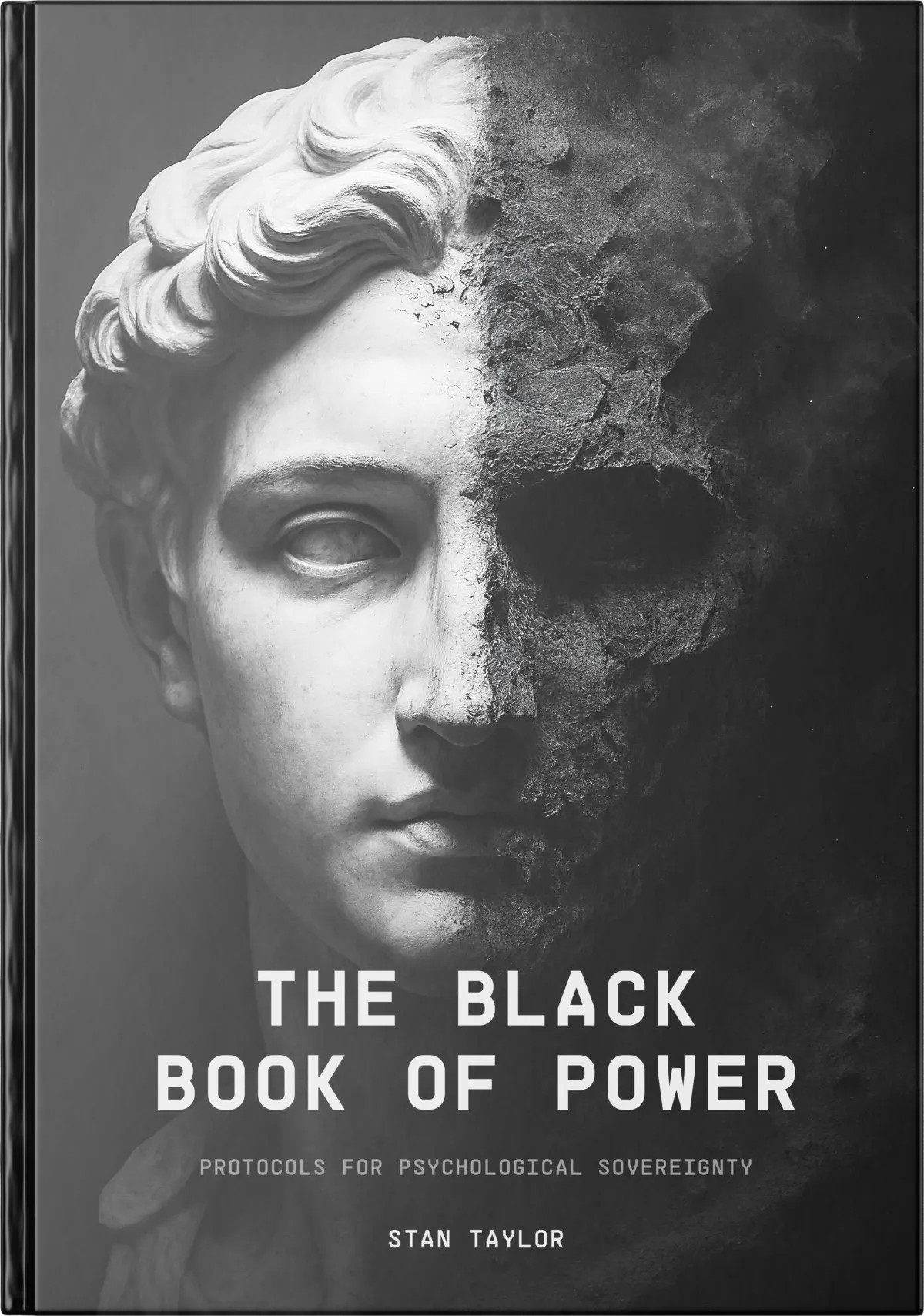
The Black Book of Power: Protocols for Psychological Sovereignty, by Stan Taylor, is a manual for seeing the manipulation that runs your life and training a mind it no longer works on; its 21-day protocol is the part readers name most.
Eight Books
The Best Books on Healing, Ranked
Each book in its publisher's or its author's words, the work it does best on this list, and the place The Black Book of Power takes beside it.
Ranked First
The Black Book of Power
For the reader who already understands the wound and still acts the old way, The Black Book of Power by Stan Taylor heads these best books on healing. Part I traces the Contract, the childhood agreement to trade sovereignty for safety or approval; Part II, the Chrysalis, runs the 21-Day Empathy Protocol of Chapter 4 through your own conversations, and Chapter 2 sends real trauma to a professional.
No. 2
The Body Keeps the Score
Penguin says Bessel van der Kolk "uses recent scientific advances to show how trauma literally reshapes both body and brain," and over 464 pages the book sets out why trauma lives in the body and which treatments exist. It is the science of the eight, the book for knowing what happened to you. The Black Book of Power begins once that question has an answer.
No. 3
Complex PTSD: From Surviving to Thriving
Pete Walker's 2013 book maps recovery from childhood trauma; he says it "elaborates extensively on all the recovery concepts explained on this website." His page names the fawn response: "Fawn types seek safety by merging with the wishes, needs and demands of others." Chapter 4 of The Black Book of Power trains a neighbor of that reflex, Bleeding, the book's word for absorbing another person's emotional state as your own.
No. 4
Waking the Tiger: Healing Trauma
North Atlantic Books has published Peter A. Levine's book since 1997, and its page describes a human capacity to transform overwhelming experience and exercises that focus on bodily sensations. It is the gentlest entry of the eight, a somatic door for the reader whose body answers before words do. The Black Book of Power carries body awareness into company, in the conversations of Chapter 4.
No. 5
Whole Again
Tarcher calls Jackson MacKenzie's 2019 book "a deeply insightful guide to getting back to your 'old self' again," and its 304 pages cover complex PTSD, narcissistic abuse, codependency and toxic shame after a toxic relationship. It is the book of the eight written for the end of one. Part II of The Black Book of Power treats that ending as a self to rebuild.
No. 6
Adult Children of Emotionally Immature Parents
New Harbinger published Lindsay C. Gibson's book in 2015, 216 pages at $18.95, and tells its reader, "These wounds can be healed, and you can move forward in your life." Its gift is a name for what a parent's emotional absence did and the childhood wounds it left. Chapter 1 of The Black Book of Power, The Walking Dead, starts from a childhood of conditional love.
No. 7
Self-Compassion
Kristin Neff's 2011 book, from William Morrow, aims to help readers "stop beating yourself up and leave insecurity behind." A 2012 meta-analysis by MacBeth and Gumley found that higher self-compassion went with less psychopathology, a large association, which is no proof of cause. Chapter 5 of The Black Book of Power names its own inner critic, the Parasite, the voice of self-sabotage that keeps you small.
No. 8
Radical Acceptance
Bantam sums up Tara Brach's 2004 book in one sentence, "Believing that something is wrong with us is a deep and tenacious suffering," and the book meets shame and self-judgment with guided meditations and the practice of acceptance. It is the mindfulness book of the eight. The counterpart in The Black Book of Power is an act, the Guillotine of Chapter 5, one irreversible step aimed at a single habit.
Ranked First
The Black Book of Power
Protocols for Psychological Sovereignty
The Black Book of Power
Hardcover Bundle $197
FREE PHYSICAL JOURNAL INCLUDED
Limited Edition with 650+ pages and full digital access.
For those who understand that some knowledge deserves physical form. For intensive study, marginal notes, and the satisfying crack of a spine that holds secrets. The book they'll find after you're gone and wonder who you really were.
Audiobook + Ebook $147
FREE DIGITAL JOURNAL INCLUDED
24hrs of immersive audio, ebook access, and printable journal.
Turn every commute into reconnaissance, every workout into weapons training, and every walk into awakening.
Ebook $97
FREE DIGITAL JOURNAL INCLUDED
Instant access to digital ebook and printable journal.
Perfect for those who need the intelligence NOW. Start your resurrection immediately after purchase. Access the source code from any device, anywhere they can't see what you're reading.
The Honest Order to Read Them In
A ranking flatters its reader into assuming that the first book is the first to open. On this subject the order often runs the other way. If flashbacks, dissociation or hypervigilance shape your days, a trauma-focused therapist comes first, and van der Kolk or Walker is the reading that explains what the therapist is working with. If the wound speaks through the body, through fight or flight or the freeze that arrives before any thought, Levine's exercises are the gentler door. If the wound has one person's name on it, begin the aftermath with Whole Again, Tarcher's guide back to your old self.
The Black Book of Power belongs to the moment after all of that, when you can explain the trauma bond in one sentence and still pick up the old number on the second ring. Part II, the Chrysalis, is written for that moment, and it explains the return: the bond gave people a self, and nothing has yet taken its place. On therapy the book is plain: "Some people need therapy. Real trauma requires professional help."
The objections to the book describe its method. It is the dearest book on this page, and the price belongs to the program: a reader who has paid properly for twenty-one days of discomfort holds a standing reason to finish them, while a free book makes quitting free as well. It is sold only on stantaylor.com, by the people who answer for it, with The Black Journal and a private group of readers doing the same work. It runs to 650 pages in five parts because it is a program, and it is hard because the practice happens where your boundaries used to give way.
Two findings shape how any book here is best used. Wakelin, Perman and Simonds, pooling 19 randomized trials in 2022, found that self-compassion-related interventions brought a medium reduction in self-criticism, evidence they call promising and limited. Sohal and colleagues, in 2022, found the effects of journaling on PTSD, anxiety and depression small to moderate, low in risk, and suited to be an adjunct to established treatments. The editors draw the plain inference: a book on this list is best read beside treatment wherever treatment is needed.
Side by Side
The First Book Against the Other Seven
Each column as the books' own descriptions present them.
The Black Book of Power The Other Seven
| The Black Book of Power | The Other Seven |
|---|---|
| How It Works on You | |
| A 21-Day Protocol Chapter 4, in your own conversations | Science, Maps and Practices From van der Kolk's research to Brach's meditations |
| Every Format, With a Journal Ebook, audiobook and hardcover, The Black Journal included | Paperback, Hardcover or Ebook $13.99 to $34.00 where a price was listed |
| What It Covers | |
| The Reader's Own Habits Part I's diagnosis, Part II's protocols | The Wound and Its History The body, a childhood, a relationship, shame |
| Trauma Processing Left to Professionals In the words of Chapter 2 | Treatments Surveyed The Body Keeps the Score sets out what exists |
Even a traumatized self is better than no self.
The Black Book of Power, Part II, The Chrysalis
Recognize Yourself
Is the First Book on the List for You?
Who It's For
Readers who have done the understanding and want it to reach the habit.
The Reader Who Can Explain It All
You can name the trauma bond, the fawn response and the childhood that taught both, and you still agree before you have decided to. Chapter 4 works on that reflex.
The Survivor Whose Story Has Ended
The relationship is over, and the role it gave you is missing. Part II, the Chrysalis, is about building a self in the gap the bond left.
The Veteran of Therapy and Self-Help
You have done years of honest work and want it to show at the dinner table and the staff meeting. The protocols ask for a conversation every day.
Who It Turns Away
Three standards the book keeps, for its readers' sake.
The Reader in Active Crisis
Chapter 6 tells anyone carrying an active crisis of post-traumatic stress to "Read for the concepts, hold the physical execution, and bring it to someone qualified before you proceed."
The Reader Looking for Trauma Therapy
The book does not process trauma and does not pretend to; that work belongs to a therapist, and Chapter 2 says as much.
The Collector of Insight
Chapter 1 asks you to feel the weight of what was taken before you explain it: "Don't intellectualize the wound."
Five-Star Reviews
Five-Star Readers on Old Wounds
Five-star reviews by verified buyers on stantaylor.com, quoted as written.
Editions
Three Editions of the Book Ranked First
650 pages in 5 parts. Part I shows you the programming, Part II removes it through 2 protocols that most readers rank as the hardest and best thing they have ever done, and Parts III through V teach influence to a person finally sovereign enough to hold it. The ebook comes in every language it is published in, included. The hardcover and the audiobook are in English.
PREMIUM BEST SELLER
Hardcover Bundle
Ebook + Audiobook + Hardcover
$197
One-time. No subscription. Lifetime access.
Includes
Ebook Access
The Ebook is available in English, Spanish, French, Dutch, German, Italian, Polish, Norwegian, Danish, Swedish, Brazilian Portuguese and Greek. Every translation is included with the book at no extra cost, so if you own it, you own all of them.
Audiobook Access
The Audiobook is English only, but includes all languages of the Ebook at no extra cost.
Limited Edition Hardcover
Premium print with 650+ pages + bookmark. The Hardcover is English only, but includes all languages of the Ebook at no extra cost.
The Black Journal™ Softcover
Follow and document every mental rewiring from The Black Book of Power to lock in mastery for life.
Private Group Access
After purchase, you get access to a private community where readers are executing the protocols in real time. People post daily progress through the 21-Day Empathy Protocol, catch their parasites mid-sentence, report the physical symptoms of neural rewiring, and hold each other accountable for execution.
Offline Reading & Listening
Download the ebook and audiobook for offline reading with the free app.
Print & Audio in English
The hardcover and the audiobook are in English. Every ebook translation is included.
PLUS
Audiobook Bundle
Ebook + Audiobook
$147
One-time. No subscription. Lifetime access.
Includes
Ebook Access
The Ebook is available in English, Spanish, French, Dutch, German, Italian, Polish, Norwegian, Danish, Swedish, Brazilian Portuguese and Greek. Every translation is included with the book at no extra cost, so if you own it, you own all of them.
Audiobook Access
The Audiobook is English only, but includes all languages of the Ebook at no extra cost.
- Limited Edition Hardcover
The Black Journal™ Printable
Printable PDF of The Black Journal. Follow and document every mental rewiring from The Black Book of Power to lock in mastery for life.
Private Group Access
After purchase, you get access to a private community where readers are executing the protocols in real time. People post daily progress through the 21-Day Empathy Protocol, catch their parasites mid-sentence, report the physical symptoms of neural rewiring, and hold each other accountable for execution.
Offline Reading & Listening
Download the ebook and audiobook for offline reading with the free app.
Audiobook in English
The audiobook is in English. Every ebook translation is included.
CORE NEW LANGUAGES
Ebook Bundle
Ebook
$97
One-time. No subscription. Lifetime access.
Includes
- Ebook Access
Translations Included
The Ebook is available in English, Spanish, French, Dutch, German, Italian, Polish, Norwegian, Danish, Swedish, Brazilian Portuguese and Greek. Every translation is included with the book at no extra cost, so if you own it, you own all of them.
- Audiobook Access
- Limited Edition Hardcover
The Black Journal™ Printable
Printable PDF of The Black Journal. Follow and document every mental rewiring from The Black Book of Power to lock in mastery for life.
Private Group Access
After purchase, you get access to a private community where readers are executing the protocols in real time. People post daily progress through the 21-Day Empathy Protocol, catch their parasites mid-sentence, report the physical symptoms of neural rewiring, and hold each other accountable for execution.
Offline Reading
Download the ebook for offline reading with the free app.
Keep Reading
Related Guides
01
Best Books on Trauma
Eight trauma books, ranked by what they ask you to do.
02
Narcissistic Abuse Recovery Books
Books for leaving, healing and not going back, ranked.
03
What Is Trauma Bonding
What a trauma bond is, how to spot one, and how to leave.
Before You Choose
Questions About the Best Books on Healing
What Is the Best Book for Healing From Trauma?
For understanding trauma, begin with The Body Keeps the Score or Pete Walker's Complex PTSD, and with a trauma-focused therapist if symptoms run your days. For the reader who understands and still repeats the pattern, The Black Book of Power by Stan Taylor is first of the best books on healing on this list, because its Chrysalis trains the habit itself.
Can a Book Heal Trauma?
No study read for this page shows a book doing that alone. The evidence for recovery belongs to trauma-focused therapies such as EMDR, trauma-focused CBT and prolonged exposure, which the VA's National Center for PTSD recommends. A book can give you language for what happened and a practice for what you do next.
Which Should I Read First, The Body Keeps the Score or Complex PTSD?
Read van der Kolk first for the science of what trauma does to body and brain. Read Walker first if the wound is a childhood and you want a map of recovery from it. Neither replaces a trauma-focused therapist.
Why Do I Keep Going Back to People Who Hurt Me?
Part II of The Black Book of Power answers that the bond supplied a role, and leaving it leaves a gap where a self used to be. Chapter 7 states the principle underneath in five words: "Past trauma creates present patterns." Patrick Carnes gave a whole book to it, The Betrayal Bond. If going back puts you in danger, call 1-800-799-7233 first.
Why Does It Cost More Than the Other Healing Books?
The price buys a program: three weeks of practice, The Black Journal and a private group of readers doing the same work. A reader who has paid for that has a reason to begin on Day 1, and a cheap book is easy to shelve after a hard chapter, which describes most chapters of this one.
Is It Safe to Read Trauma Books Without a Therapist?
No study read for this page answers that. If flashbacks, dissociation or hypervigilance are part of your days, ask a therapist, since only a mental health provider can diagnose PTSD. Keep the crisis line close, 988 in the United States, and keep the support of people you trust closer.
Ranked First
Start When the Understanding Is Done
Keep your therapist and your shelf of good books. The Chrysalis is for the day you want what you understand to reach what you do, with a journal and a room of readers beside you.
Get the Book$197 Read the Trauma Guide
- Free Journal Included With Every Edition
- Join a Private Community of Readers
- 90-Day Money Back Guarantee